

Picking the wrong self-publishing platform can cost you more than frustration. According to a 2026 analysis of over 10,000 titles, 73% of authors choose the wrong publishing partner, resulting in an average of $2,400 in rework costs and a four-month delay. With so many options available, from Amazon's ecosystem to wide-distribution aggregators, this self-publishing platforms comparison 2026 guide breaks down what actually matters: royalty rates, print quality, distribution reach, and ease of use. Whether you're publishing your first novel or scaling a series, you'll find clear, honest guidance here.
Table of Contents
- Key takeaways
- 1. Key criteria for comparing self-publishing platforms
- 2. Amazon KDP: the dominant platform for ebook and print reach
- 3. IngramSpark: wide print distribution for bookstores and libraries
- 4. Draft2Digital and Lulu: wide distribution and premium print
- 5. Side-by-side comparison of top self-publishing platforms
- 6. How to choose the right platform for your author goals
- My honest take on platform selection in 2026
- Finish your book faster with Booksculpt
- FAQ
Key takeaways
| Point | Details |
|---|---|
| Platform choice has real costs | Choosing the wrong platform leads to costly rework and delays that hurt your publishing timeline. |
| Royalty rates vary widely | KDP offers up to 70% on ebooks; IngramSpark nets 40–45%; Draft2Digital pays 60% net. |
| Combining platforms is common | Many successful authors use KDP for Amazon reach and IngramSpark for bookstore distribution. |
| All-in-one tools reduce friction | Platforms like Booksculpt unify writing, formatting, and publishing to cut per-book costs. |
| Match platform to your goals | Your audience, budget, and distribution priorities should drive which platform you choose. |
1. Key criteria for comparing self-publishing platforms
Before you pick a platform, you need a clear framework. Not every author has the same goals, and the best self-publishing platforms 2026 has to offer are only "best" relative to what you actually need.
Here are the factors worth evaluating carefully:
- Royalty rates and pricing models: Understand both the headline percentage and the hidden fees. Print delivery costs, for example, rose 12% in 2026, which directly affects your take-home per paperback.
- Print format availability: Not every platform supports hardcovers, large-print editions, or dust jackets. If your genre or audience expects premium formats, this matters.
- Distribution reach: Does the platform get your book into libraries, independent bookstores, and international markets, or just Amazon?
- Usability and learning curve: Some platforms are beginner-friendly with intuitive dashboards. Others require more technical setup but offer greater control.
- Revision policies: Can you update your files after publishing? Are there fees? This is a detail many authors overlook until it costs them.
- Marketing support: A few platforms offer promotional tools, discount programs, or visibility boosts. Most do not.
- Compatibility with professional services: If you plan to hire an editor or cover designer through a marketplace, check whether the platform's file requirements match standard deliverables.
Pro Tip: Before committing to any platform, upload a test file and check how it renders on the platform's previewer. This five-minute step reveals formatting issues that could cost you hours later.
2. Amazon KDP: the dominant platform for ebook and print reach
Amazon Kindle Direct Publishing remains the starting point for most indie authors, and for good reason. Its reach inside the Kindle ecosystem is unmatched, and its dashboard is genuinely easy to use even for first-time publishers.
The royalty structure is straightforward. KDP pays 35–70% on ebooks, with the 70% tier applying to books priced between $2.99 and $9.99. For paperbacks and hardcovers, you receive 60% of the list price minus printing costs. The math works out well if your book is priced competitively and formatted cleanly.
KDP Select is the platform's exclusivity program. Enrolling means your ebook is available only through Amazon for 90-day periods, but you gain access to Kindle Unlimited, Kindle Countdown Deals, and free promotion days. KDP Select authors collectively earned $69.3 million in royalties in March 2026 alone, which shows just how active that ecosystem is.
The trade-offs are real, though. KDP Select exclusivity means you cannot distribute your ebook elsewhere during enrollment periods. Print format options are also more limited than IngramSpark. And while KDP's new quality standards in 2026 give polished books 23% more search visibility, that same standard penalizes poorly formatted uploads.
Best for: Authors focused on Amazon sales, beginners who want a simple setup, and anyone targeting Kindle Unlimited readers.
3. IngramSpark: wide print distribution for bookstores and libraries
IngramSpark serves a different need. If you want your paperback or hardcover sitting on a bookstore shelf or available through a library catalog, IngramSpark's wholesale distribution network is the most direct path to get there.
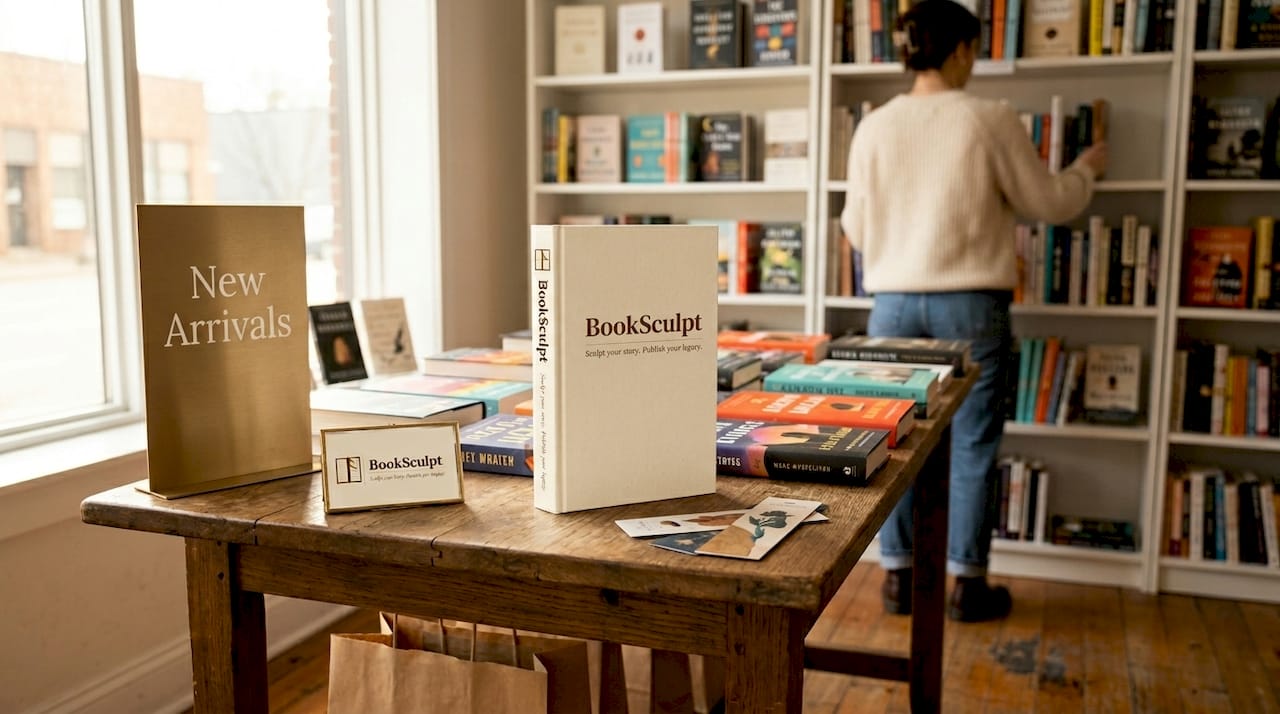
The platform's print quality is genuinely superior for physical books. You get options like hardcovers with dust jackets, larger trim sizes, and premium paper stock that KDP simply does not offer. That matters if you're publishing illustrated books, gift books, or anything where physical presentation is part of the product.
Here is what changed in 2026 that makes IngramSpark more accessible:
- Setup fees removed: IngramSpark no longer charges upfront fees to publish.
- 60 days free revisions: You can update your files within 60 days of publishing at no cost.
- New market access fee: A 1.875% market access fee applies from 2026, which is worth factoring into your royalty calculations.
The royalty structure reflects the wholesale model. IngramSpark provides 40–45% net, after bookstore discounts are applied. This is lower than KDP's ebook rate, but it reflects the reality that physical book retail involves more middlemen.
The learning curve is steeper than KDP. File specifications are strict, and the dashboard is less forgiving of formatting errors. You will also want to plan your platform strategy carefully: IngramSpark cannot distribute to Kindle if your ebook was published on KDP within the prior 12 months.
Pro Tip: Use IngramSpark for print distribution and KDP for your ebook. This combination gives you Amazon's ebook reach without sacrificing bookstore access for your physical edition.
Best for: Authors who want physical bookstore and library placement, premium print formats, and global wholesale reach.
4. Draft2Digital and Lulu: wide distribution and premium print
These two platforms are not direct competitors to each other. They solve different problems, and many authors use both alongside KDP and IngramSpark.
Draft2Digital is an aggregator. Instead of uploading your book to 20 retailers individually, you upload once and Draft2Digital handles distribution to 23+ retailers and library networks. The royalty split is clean: Draft2Digital offers 60% net after retailer cuts, with no upfront fees. Speed is a genuine advantage here. A 2026 API update reduced distribution delays by 60%, meaning your book can reach multiple retailers in 48 to 72 hours compared to the 7 to 14 days competitors typically take.
Lulu has been around since 2002 and built its reputation on print quality. It supports unique formats like photo books, calendars, and coil-bound editions that you will not find on KDP or IngramSpark. Lulu provides 80% of profit to authors, which sounds exceptional until you factor in that base printing costs are higher. The net result per book can be comparable to other platforms depending on your pricing.
Key considerations for each:
- Draft2Digital is ideal if you want wide ebook distribution without managing multiple accounts.
- Lulu works best for specialty print projects or authors who want maximum control over physical production.
- Successful authors commonly combine KDP for Amazon, IngramSpark for print bookstores, and Draft2Digital for wide ebook reach.
5. Side-by-side comparison of top self-publishing platforms
Here is a quick-reference table to help you assess the top platforms in this self-publishing comparison guide at a glance.
| Platform | Ebook royalty | Print royalty | Distribution | Ease of use | Best for |
|---|---|---|---|---|---|
| Amazon KDP | 35–70% | 60% minus print cost | Amazon ecosystem | Very easy | Beginners, Kindle Unlimited |
| IngramSpark | N/A | 40–45% net | Global bookstores, libraries | Moderate | Print-focused, wide retail |
| Draft2Digital | 60% net | Limited | 23+ retailers, libraries | Easy | Wide ebook distribution |
| Lulu | N/A | 80% of profit | Lulu store, select retailers | Moderate | Specialty print formats |
A few points worth noting beyond the table. There is no universally "best" platform; the right choice depends entirely on whether you prioritize Amazon reach, bookstore distribution, or premium print quality. Royalty differences also reflect fundamentally different models: KDP uses retail pricing while IngramSpark relies on wholesale pricing with bookstore discounts built in.
Pro Tip: Do not compare royalty percentages in isolation. Always calculate your actual dollar earnings per book at your planned retail price, after printing and delivery costs.
6. How to choose the right platform for your author goals
This is where most self-publishing guides fall short. They list the platforms but leave you to figure out the fit. Here is a practical decision process you can actually use.
- Start with your distribution priority. If Amazon is your primary market, KDP is your foundation. If you want physical bookstore placement, add IngramSpark for print. If you want broad ebook reach beyond Amazon, add Draft2Digital.
- Assess your budget honestly. Professional editing and cover design average $1,800 through vetted marketplaces. Factor platform fees, printing costs, and service costs together before choosing.
- Consider your publishing volume. Series publishing reduces costs per book significantly when you work with the right platform and tools. If you plan to publish multiple titles, a flat-fee subscription model often beats per-book pricing.
- Match your technical comfort level. If the idea of preparing print-ready PDFs to IngramSpark's exact specifications sounds stressful, start with KDP and build from there.
- Plan for revisions from day one. Uploading a corrected file after launch is normal. Know your platform's revision policy before you publish, not after you find a typo on page 12.
- Think about professional services compatibility. If you use a marketplace like Reedsy, where 89% of vetted professionals meet quality standards, confirm the files they deliver match your platform's requirements.
Pro Tip: If you are just starting out, publish your ebook on KDP first. Once you have validated your book with real readers, expand to IngramSpark for print and Draft2Digital for wide ebook distribution. This staged approach keeps your learning curve manageable.
My honest take on platform selection in 2026
I've watched authors pour months of work into a manuscript, then rush the platform decision in an afternoon. That mismatch is where most publishing regrets come from.
In my experience, the authors who struggle most are the ones who treat platform selection as a checkbox rather than a strategy. They pick KDP because it's familiar, skip IngramSpark because the setup looks complicated, and then wonder six months later why their paperback isn't available at any bookstore. The distribution gap costs real sales.
What I've found works is thinking about your book's life in two phases. Phase one is launch: you want speed, visibility, and Amazon reach. Phase two is longevity: you want your book findable in libraries, bookstores, and international markets for years. No single platform serves both phases equally well, which is why the multi-platform approach isn't just a workaround. It's the actual strategy.
The other thing I want to say plainly: technology is changing what's possible for indie authors faster than most platform guides acknowledge. AI-assisted formatting, automated distribution, and integrated marketing tools are not gimmicks. They are genuinely reducing the time and cost between "finished manuscript" and "published book." Authors who embrace these tools thoughtfully are publishing faster, spending less, and spending more time writing. That's the direction the 2026 self-publishing review data points toward, and it's the direction I'd encourage you to move in.
— Soumitra
Finish your book faster with Booksculpt
You've done the hard work of comparing platforms. Now the question is whether your manuscript is ready to make the most of them.
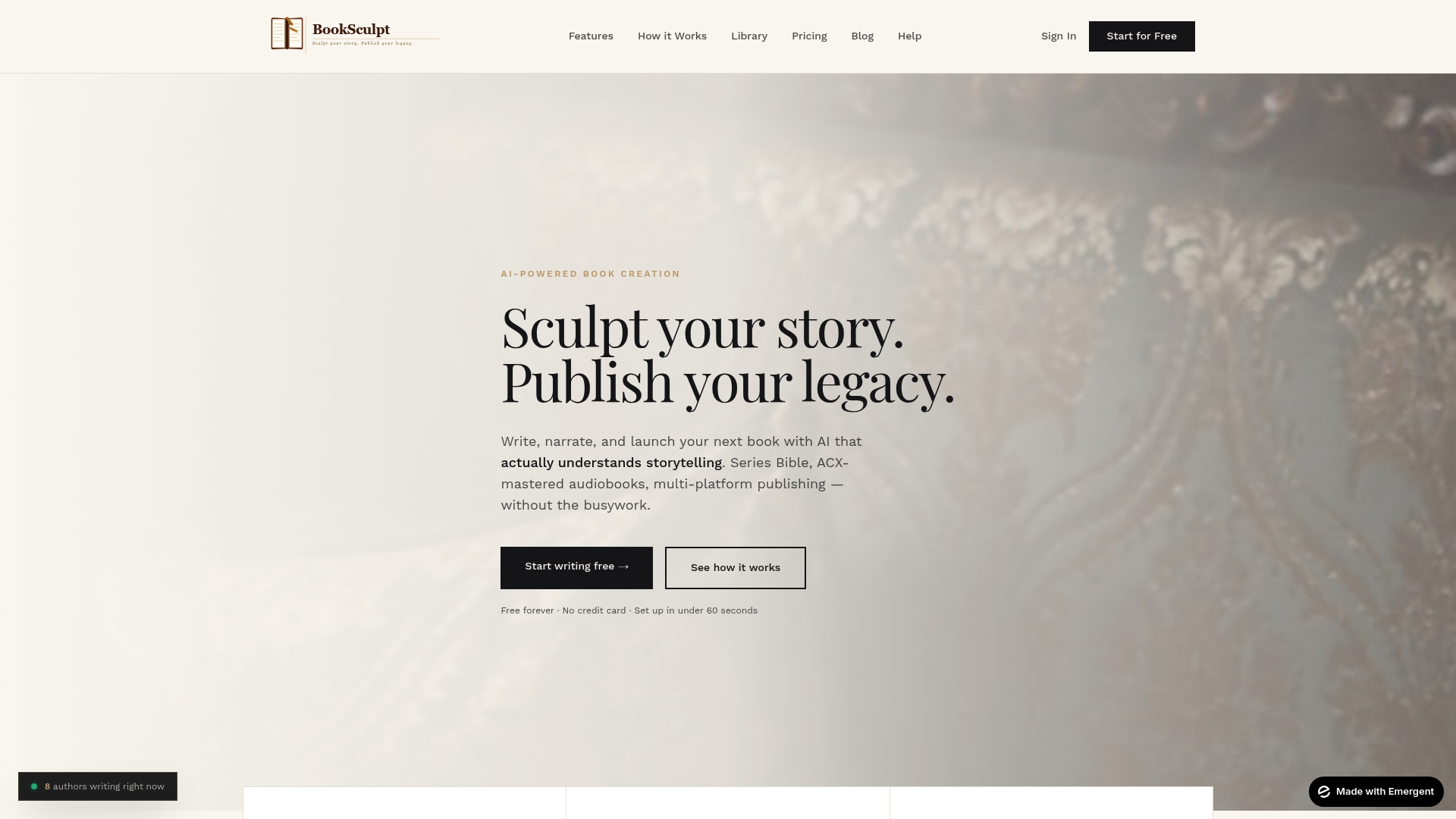
Booksculpt is an AI-powered platform built specifically for indie authors who want to write, format, and publish without the usual chaos. From AI writing assistance and smart editing to automated KDP formatting and audiobook production, everything lives in one place. You get a series bible tool, an audiobook studio, and multi-platform distribution support, all under one subscription starting at $19/month. Instead of spending $1,500 to $5,000 per book on scattered services, you get the full workflow in one place. See how it works and find the plan that fits where you are right now.
FAQ
Which self-publishing platform pays the highest royalties?
Amazon KDP offers up to 70% on ebooks priced between $2.99 and $9.99, while Lulu offers 80% of profit on print. The highest percentage depends on format and pricing.
Can I publish on multiple platforms at the same time?
Yes, with one key exception: enrolling in KDP Select requires ebook exclusivity on Amazon. For print, you can use both KDP and IngramSpark simultaneously without conflict.
How long does it take to publish on these platforms?
Draft2Digital is the fastest, distributing to 23+ retailers in 48 to 72 hours after its 2026 API update. KDP typically approves books within 24 to 72 hours.
Is IngramSpark worth it for new authors?
IngramSpark is best suited to authors who specifically need bookstore and library distribution. For beginners focused on ebook sales, starting with KDP is simpler and more cost-effective.
What is the biggest mistake authors make when choosing a platform?
Choosing based on royalty percentage alone, without accounting for printing costs, distribution reach, and revision fees, leads to the costly rework that affects 73% of authors who pick the wrong partner.